
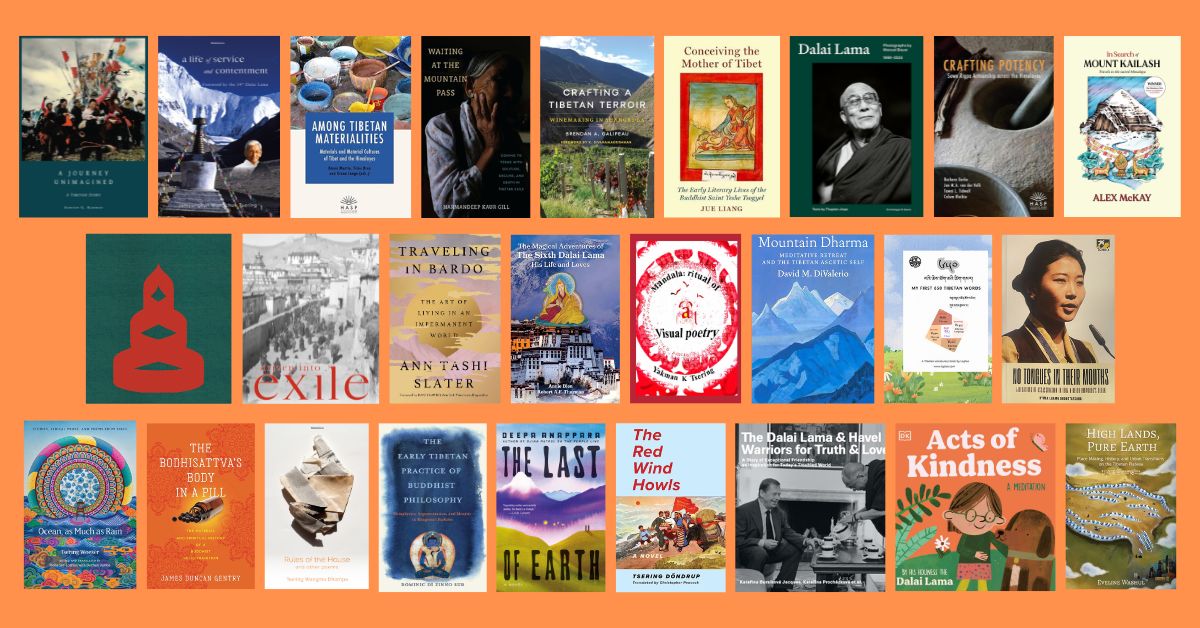
High Peaks Pure Earth presents the Summer 2026 Tibet Reading List!
This is the first time we’ve done a Tibet Reading List since Spring 2025 so there is much to choose from. In this list please find over 30 titles covering the span of the entire Tibetan Buddhist world.
If you think we’ve missed anything or if you have a particular recommendation please feel free to get in touch with us, it’s impossible for us to keep track of all Tibet-related publications! You’re also welcome as always to write your own short reviews in the comments section or on your social media, just tag us so that we see it or use the hashtag #TibetReadingList.
We’ve continued to add links to Bookshop.org, if you buy books linked from our site, we may earn a small commission and, at the same time, you are supporting independent bookshops! Where a book is not available on Bookshop we have added a link to Amazon for ease of reference.
See below for the Summer 2026 Tibet Reading List which we have (broadly) categorised. For books not directly about Tibet but may include Tibet or be of general interest, we have placed them in the section at the bottom called Special Mentions. Do look out for the titles which are Open Access.
Happy reading!
Politics, History and Non-Fiction
“In Search of Mount Kailash” By Alex McKay
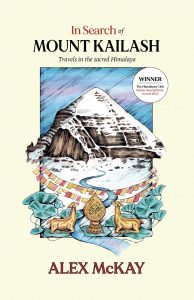
Published by Rachna Books and winner of the 2025 Kekoo Naoroji Book Award for Himalayan Literature, “In Search of Mount Kailash” by Alex McKay recounts his early Himalayan travels and how he came to understand the Kailash phenomena.
From the publisher’s website:
Secluded in a remote corner of the Himalayas, Tibet’s ‘Mount Kailash’ is the world’s most widely revered mountain – and after a decade of travelling, Alex McKay hitch-hiked to Kailash in 1986 and quickly became obsessed with it. Soon after, he became an academic and published the definitive history of the sacred site and its Indian off-shoots.
In Search of Mount Kailash recounts Alex’s early Himalayan travels and how he came to understand the Kailash phenomena. Along the way he meets with extraordinary scholars and devout monks, colourful spiritual masters and hospitable Maharajas, humble pilgrims and wandering shepherds. He interviews the Dalai Lama, states down the barrel of a Chinese soldier’s rifle, and ultimately finds an unexpected home away from home near the source of the Ganges.
Available from Rachna Books: https://rachnabooks.com/product/in-search-of-mount-kailash/
“Traveling in Bardo: The Art of Living in an Impermanent World” By Ann Tashi Slater
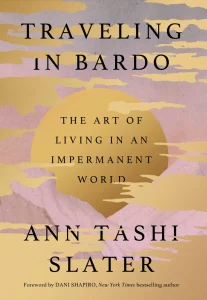
Published in September 2025 by Hachette, “Traveling in Bardo: The Art of Living in an Impermanent World” by Ann Tashi Slater is a guide to navigating transition and impermanence rooted in the Tibetan Buddhist tradition of bardo. Using The Tibetan Book of the Dead as a framework, the book interweaves Buddhist philosophy, the author’s Tibetan family history, and her experiences growing up across cultures to explore how to live in a world where change is the only constant.
From the publisher’s website:
In a world where nothing lasts forever, how do we live? Life is perpetually, endlessly filled with change: new jobs and new loves, unfamiliar places and faces. And entwined in that change is loss: loss of what was or is, or what could have been. In the midst of this shifting landscape, Traveling in Bardo invites us to embrace impermanence in a powerful way, rooted in ancient wisdom.
Interweaving explorations of bardo in relation to marriage and friendship, parents and children, work and creativity with stories of her Tibetan ancestors and the Buddhist teachings on the fleeting nature of existence, Ann Tashi Slater illuminates what the teachings have to tell us in our contemporary lives. She relays vital wisdom from Tibetan culture, giving us a bold, new framework to navigate moments of change and live life fully.
During over forty years of writing and speaking about her Tibetan-American heritage and the relevance of Buddhism in Western society, Slater has come to see how Tibetan bardo views on impermanence can transform the way we live. In Tibetan belief, bardo is the interval between death and rebirth, as well as the intermediate state between birth and death. It also refers to liminal periods in life when the reality we know comes to an end. A time of great possibility, it offers us the opportunity to find happiness in an impermanent world.
Amazon: https://amzn.to/4gbyqvV
“Limi, the Land In-Between. The Art of Governing a Buddhist Frontier Community in the Himalaya” By Astrid Hovden
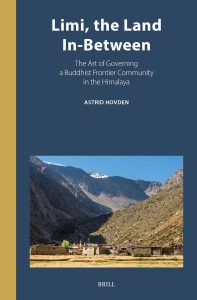
Published in February 2025 by Brill, “Limi, the Land In-Between. The Art of Governing a Buddhist Frontier Community in the Himalaya” by Astrid Hovden examines the art of governing a Himalayan frontier community through local institutions and customary law in the context of extensive socio-economic and political change.
From the publisher’s website:
“Limi, the Land In-Between” discusses the roles of the village assembly and the Buddhist monastery in local governance and details the monastery’s functions as a ritual provider, tax collector, and its contribution to environmental management and conflict resolution. Adopting a longitudinal perspective, the author explores how the villagers adapt to shifting Nepali administrative reforms and navigate the dilemmas arising with increasing outmigration as well as other transformations within the broader regional and global context.
Amazon: https://amzn.to/4xEKwoy
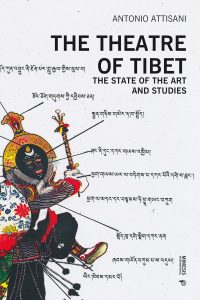
“The Theatre of Tibet: The State of the Art and Studies” By Antonio Attisani
Published by Mimesis International, Italy, in 2024, “The Theatre of Tibet: The State of the Art and Studies” by Antonio Attisani looks at Tibet’s theatrical culture.
From the publisher’s website:
The theatrical culture of Tibet is probably the last to remain virtually unknown to the outside world, and to the West in particular. As well as describing the current situation of studies on Tibetan theatre, the current volume also provides an essay on imagination and how it is concretely manifested by the Tibetan people and their actors.
Recent decades have seen radical change for Tibetan theatre, ache lhamo, now performed by a diaspora for whom a declining artistic and technical change derives from an uncertain politics concerning secular and popular culture, as well as the ongoing cultural genocide caused by China’s subjection of Tibet.
Amazon: https://amzn.to/4fQgyaZ
“Crafting Potency: Sowa Rigpa Artisanship across the Himalayas” By Barbara Gerke, Jan M. A. van der Valk, Tawni L. Tidwell, Calum Blaikie (eds.)
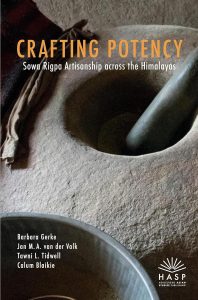
Published in February 2026 by Heidelberg Asian Studies Publishing, “Crafting Potency: Sowa Rigpa Artisanship across the Himalayas” edited by Barbara Gerke, Jan M. A. van der Valk, Tawni L. Tidwell and Calum Blaikie investigates the intricate interweaving of knowledge, practice, and materials through which potency is sculpted in Sowa Rigpa (Tibetan medicine).
This title is Open Access. The book and its chapters can be viewed and downloaded for free from the publisher’s website.
From the publisher’s website:
Informed by Tibetan medical literature and extensive fieldwork with practitioners (amchis) from Ladakh, Dharamsala, and Kathmandu, the authors explore how potency is understood and manipulated in the making of multi-ingredient medicines. Taking inspiration from Tim Ingold’s ecologically attuned phenomenology and Pamela Smith’s concept of “artisanal epistemologies,” potency is presented as efficacy-in-becoming—a fluid capacity sculpted and layered through skilled artisanship, ritual, and environment, rather than a fixed property of stable substances. Highlighting the deep immersion of amchis in their social, ecological, technical, and spiritual lifeworlds—and exploring what changes when knowledge is transmitted through institutional rather than lineage-based training—the book contributes nuanced practice-based perspectives to the anthropology of craft and the history of science.
Amazon: https://amzn.to/4xxa9XY
“Crafting a Tibetan Terroir – Winemaking in Shangri-La” By Brendan A. Galipeau
Published in January 2025 by the University of Washington Press, “Crafting a Tibetan Terroir – Winemaking in Shangri-La” by Brendan A. Galipeau examines how wine has transformed Tibetan land and lives.
Read an interview with Brendan A. Galipeau conducted by High Peaks Pure Earth editor Dechen Pemba for Made in China journal: https://madeinchinajournal.com/2025/07/11/crafting-a-tibetan-terroir-a-conversation-with-brendan-galipeau
From the publisher’s website:
Set in the Sino-Tibetan border region renamed “Shangri-La” by the Chinese government for tourism promotion, Crafting a Tibetan Terroir considers how the deployment of the French notion of terroir works to create new forms of ethno-regional identities and village landscapes through the production of Tibetan wine as a commodity. In Shangri-La, a rapidly developing international ethno-travel destination, European histories and global capitalism are being reestablished and reformulated through viticulture, which has altered landscapes and livelihoods.
From the introduction of vineyards by nineteenth-century French and Swiss Catholic missionaries to make sacramental wine to twenty-first century commercialization, this ethnography documents the ways Tibetans are indigenizing modernity in the context of economic development on their own terms. It provides timely insight into China’s rapid entry into the global wine market, highlighting the localized impacts of this emergent industry, which include transformation from subsistence agriculture to monocropping and intensified agrochemical use. It also addresses larger issues of international trade, suggesting that certain commodities—stimulants and intoxicants in particular—have long connected Europe and the Asia Pacific region, and that these connections are now being reconceived in fashioning new industries and identities.
Bookshop: https://uk.bookshop.org/a/4863/9780295753362
Amazon: https://amzn.to/4wkuLSi
“Among Tibetan Materialities: Materials and Material Cultures of Tibet and the Himalayas” By Emma Martin, Trine Brox, and Diana Lange (eds.)
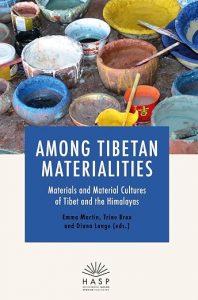
Published with Heidelberg Asian Studies Publishing in October 2025, “Among Tibetan Materialities: Materials and Material Cultures of Tibet and the Himalayas” edited by Emma Martin, Trine Brox, and Diana Lange makes an intervention into Tibetan studies by critically engaging with material culture. This title is Open Access.
From the publisher’s website:
[The volume] opens up new sources, methodologies and frameworks for studying, thinking and writing about material culture, materials and materiality in Tibet and the Himalayas. It highlights novel ways that Tibetan and Himalayan worlds can be made relevant beyond their local contexts. Spanning historical and contemporary contexts, this collection of ongoing research disrupts current approaches to Tibetan and Himalayan materiality by considering socially constructed materiality and the materials constituting things, from their conception and production to their end of life and afterlife.
The book and its chapters can be viewed and downloaded for free from the publisher’s website.
Amazon: https://amzn.to/45QJ2eO
“High Lands, Pure Earth: Place Making, History, and Urban Transitions on the Tibetan Plateau” By Eveline Washul
Published by Cornell University Press in May 2026, “High Lands, Pure Earth: Place Making, History, and Urban Transitions on the Tibetan Plateau” by Eveline Washul foregrounds Tibetan experiences of urban transitions in China’s late-reform period.
From the publisher’s website:
In the twenty-first century, China’s accelerated urbanization has transformed the Tibetan Plateau. Yet Tibetan urban experiences continue to be profoundly shaped by senses of being in the world that long predate Tibet’s subjugation into the modern Chinese nation-state.
Eveline Washul adopts Indigenous studies frameworks to explore how Tibetans actively engage history, peoplehood, and place to build belonging and community even in urban spaces characterized by intense state-led development and assimilation. Novel analysis of Tibetan textual sources shows how the geobody of Tibet’s empire (seventh to ninth centuries) remained the basis for Tibetan perceptual regions and spatial imaginaries through the centuries, even as those regions changed. Ethnographic research highlights circuits of mobility Tibetans travel between homelands and China’s cities—and the new social landscapes these mobilities produce. Urban Tibetans, instead of dissolving ties to home, expand their social networks and mobilities into urban spaces. High Lands, Pure Earth documents the enduring strength of Indigenous resilience despite the hegemony of nation-state power.
Bookshop: https://uk.bookshop.org/a/4863/9781501786921
Amazon: https://amzn.to/4gp6u8W
“A Life of Service and Contentment” By Jamyangkyil Wangchuk Tsering
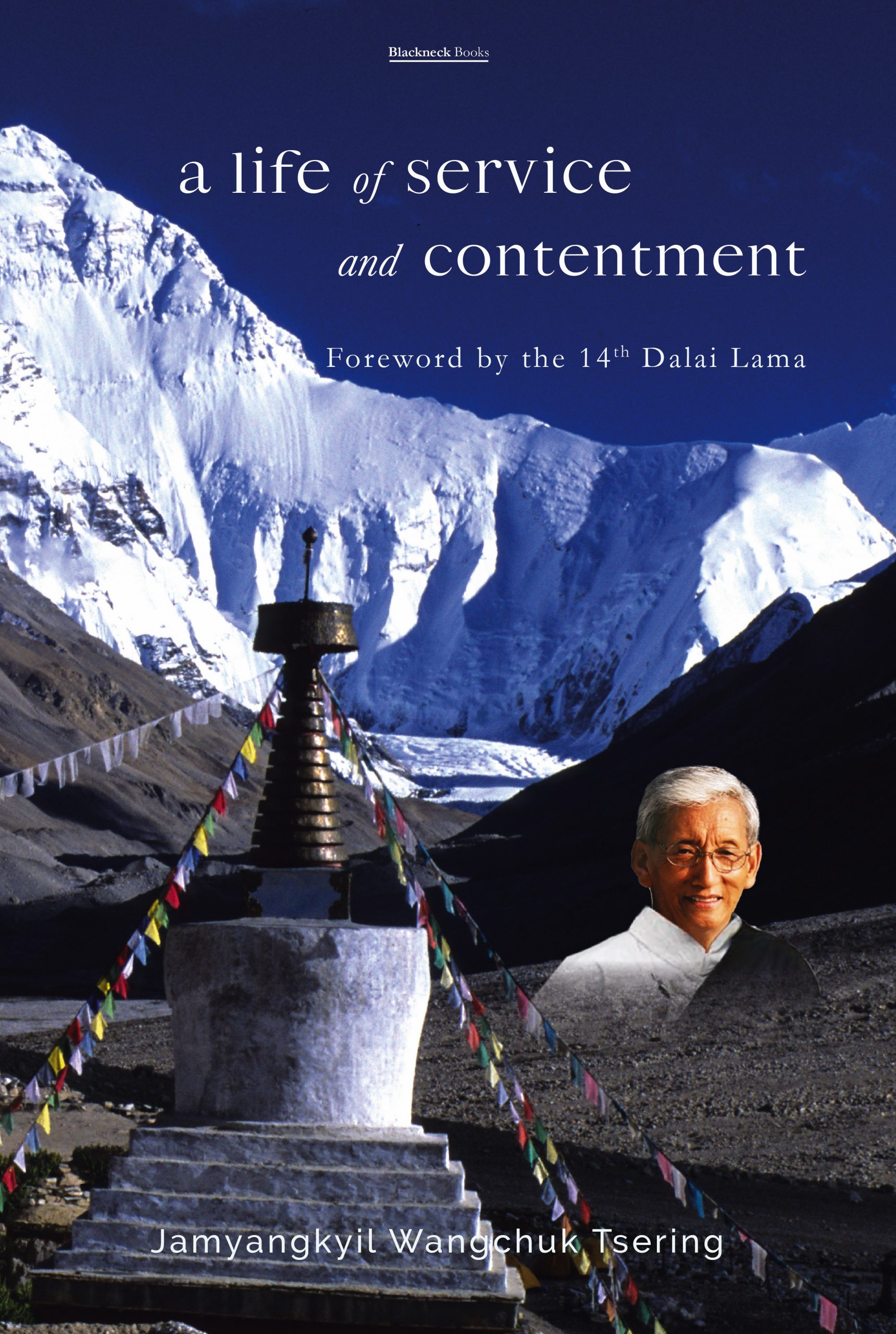
Published by Blackneck Books in Dharamsala, India, in November 2025, “A Life of Service and Contentment” by Jamyangkyil Wangchuk Tsering is a memoir of an extraordinary life of service and resilience.
Born in free Tibet, he went into exile in 1956, a few years before his homeland lost its independence. After studying in Darjeeling, he began working with the Tibetan Freedom Press in the town and subsequently received specialized training from the CIA.
Driven by a commitment to his people’s cause, he joined the Tibetan Intelligence Bureau and was actively involved with the Tibetan resistance fighters operating from Mustang, Nepal. As the Representative of His Holiness the Dalai Lama in Nepal, Wangchuk Tsering diligently oversaw the welfare of Tibetans living in the country, continuing his lifelong dedication to serving his people.
Contact Blackneck Books for this title via their social media channels: https://www.instagram.com/blackneckbooks/
“Dalai Lama: Photographs by Manuel Bauer (1990–2024)” edited by the Gaden Phodrang Foundation of the Dalai Lama
Published in July 2025 by Scheidegger & Spiess, “Dalai Lama: Photographs by Manuel Bauer (1990–2024)” is edited by the Gaden Phodrang Foundation of the Dalai Lama and features་many images which are published for the first time.
From the publisher’s website:
No other photographer in the world is as close to His Holiness as Manuel Bauer, whose deep interest in Buddhism and Tibet dates back more than three decades. Since 1990, Bauer has visited and traveled with the Dalai Lama many times and has captured his public appearances and events as well as his private life in thousands of atmospheric photographs.
The volume is rounded out with essays contributed by Thupten Jinpa, the Dalai Lama’s longtime interpreter and a renowned Buddhist scholar, and Swiss journalist Christian Schmidt. They broaden our view of Tibetan culture and religious tradition and our understanding of the Dalai Lama’s significance.
Bookshop: https://uk.bookshop.org/a/4863/9783039422388
Amazon: https://amzn.to/4x1abI8
Please note the book is also available in German and French.
“Waiting at the Mountain Pass: Coming to Terms with Solitude, Decline, and Death in Tibetan Exile” By Harmandeep Kaur Gill
Published by the University of Pennsylvania Press as part of their “Contemporary Ethnography” series in March 2025 “Waiting at the Mountain Pass: Coming to Terms with Solitude, Decline, and Death in Tibetan Exile” by Harmandeep Kaur Gill is an intimate meditation on aging and dying in exile among elderly Tibetans in Dharamsala, India.
From the publisher’s website:
In a Tibetan saying, the journey of life is likened to a climb up to a mountain pass. Upon reaching it, the journey concludes and one must cross over into death and the next rebirth. The impermanence of life—described by the Buddha as the nature of reality—crystallizes at the mountain pass, manifesting itself through the painful and arduous descent ahead and a series of sufferings.
In this book, Harmandeep Kaur Gill offers an intimate meditation on the last part of the journey at the mountain pass through closely drawn portraits of elderly, exiled Tibetans who aged in Dharamsala, India, far away from their beloved homeland of Tibet, and often alone, in the absence of family. In Gill’s work, the mountain pass represents a “borderland,” an in-between world, where the elderly found themselves living at the crossroad between life and death, belonging fully to neither of them. It was a time-space where everyday life traversed between past and present, in darkness and light, and in dream and reality, as the elderly attempted to come to terms with the realities of their old age.
By placing relational entanglements and sensations at the heart of its theorization, Waiting at the Mountain Pass foregrounds an embodied knowing that is care-ful, hesitant, and unresolved in its claims. Aiming to bridge the gap between ethics and epistemology, Gill invites the reader to see and listen in a relational and imaginative way where the other reflects back upon the self, making the assumed separations between subject and object blurry and unsettling. Through meditations on the interrelations of body and mind, society and individual, and the real and the imagined, Waiting at the Mountain Pass provides a sensorial and compassionate understanding of the singularities of life and death in a Tibetan Buddhist world in exile.
Bookshop: https://uk.bookshop.org/a/4863/9781512827354
Amazon: https://amzn.to/3SnUATL
“The Dalai Lama & Havel: Warriors for Truth & Love” By Kateřina Bursíková Jacques and Kateřina Procházková

Originally published in Czech in 2021, Kateřina Bursíková Jacques and Kateřina Procházková bring to life the deep friendship between the Tibetan spiritual leader and the first president of the Czech Republic — two men united by compassion, courage, and a shared belief in the transformative power of truth and love.
The English edition offers readers worldwide the chance to explore, for the first time, the personal encounters and moral convictions that bound Havel and the Dalai Lama — two figures who stood firm against oppression and inspired millions to uphold freedom, dignity, and human rights.
From the ICT Europe website:
Beyond a portrait of friendship, The Dalai Lama & Havel: Warriors for Truth & Love also serves a higher purpose: to draw attention to the ongoing suffering of the Tibetan people and the existential threats facing Tibet’s culture, religion, and environment under Chinese occupation. The book reminds us that the defense of Tibet is not only a moral duty but a test of the strength and integrity of democracy in the free world.
Through the stories of two global visionaries, the publication affirms a timeless truth: that compassion and moral courage transcend nations and generations.
More information and order here: https://savetibet.eu/product/the-dalai-lama-havel-warriors-for-truth-love/
“No Tongues in Their Mouths: Allegations of Assassination in Tenzin Delek Rinpoche’s Death” By Nyima Lhamo Drongtatsang
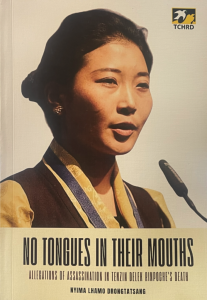
Published in July 2026, “No Tongues in Their Mouths: Allegations of Assassination in Tenzin Delek Rinpoche’s Death” by Nyima Lhamo Drongtatsang was translated from Tibetan into English by the Tibetan Centre for Human Rights and Democracy (TCHRD).
From a report on the book launch by Phayul:
The book presents the author’s first-hand account of her uncle Tenzin Delek Rinpoche’s persecution. It chronicles how Tenzin Delek Rinpoche was subjected to a sustained campaign of defamation, politically motivated charges, and ultimately died after enduring 13 years of torture and ill-treatment in a Chinese prison. The book also recounts Nyima Lhamo’s own journey into exile on 24 July 2016 and documents her international advocacy campaign seeking justice for the wrongful death of her uncle.
Contact TCHRD for details: https://tchrd.org
“A Journey Unimagined: A Tibetan Story” By Samten G. Karmay
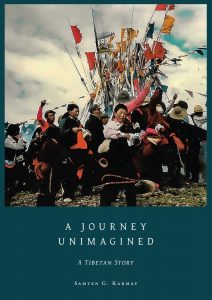
Published in May 2026 by Vajra Books, “A Journey Unimagined: A Tibetan Story” is the memoir of eminent scholar Samten G. Karmay and released as he reached 90 years of age.
From the publisher’s website:
Samten Karmay’s work has been an inspiration to emerging Tibetologists breadth of his investigations, covering areas as diverse as the Gesar epic, the Bon religion, indigenous belief systems, the history of several different periods, biography – most notably a study of the life of the Fifth Dalai Lama – and numerous other topics besides. His PhD from the University of London, which he obtained in 1985, was the basis for the first book-length study of the origins and development of the spiritual system known as the Great Perfection (Dzogchen).
Born into a moderately well-to-do family in northeast Tibet in 1936, from an early age Samten Karmay displayed an intellectual curiosity and scholarly aptitude that marked him down as a natural candidate for monastic training, a path he went on to pursue at Drepung Monastery in Lhasa. A witness to the Lhasa Uprising of May 1959 and its bloody aftermath, he escaped into exile first in Nepal and, subsequently, India, where a meeting with David Snellgrove, the future Professor of Tibetan Studies at the University of London, led to him taking up residence in the UK and, later on, France, where he now resides. Samten Karmay’s work has been an inspiration to emerging Tibetologists of all nationalities, but most particularly to young Tibetans, and this book tells the story of the paths the author travelled and the obstacles he overcame to become one of the most prolific, original and respected figures in his chosen field of scholarship.
“Driven into Exile” By Ugen Tsering-Utse
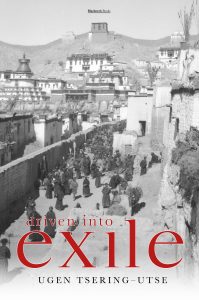
Published in 2025 by Blackneck Books in Dharamsala, India, “Driven into Exile” by Ugen Tsering-Utse is a compelling memoir by, charting an extraordinary journey from a life in covert operations to becoming a successful entrepreneur.
Born to a simple family in Central Tibet, Ugen’s life took an extraordinary turn when he was chosen to serve Gyalyum Chenmo, the Great Mother of the Fourteenth Dalai Lama. In the aftermath of China’s occupation of Tibet, like thousands of his fellow Tibetans, he was forced into exile, fleeing the only home and the family he had ever known. His journey led him from serving as a house-helper in Kalimpong—a bustling frontier town which was then both the Tibetan émigré world and a hub of international espionage—to emerging as a CIA-trained operative.
At one point in his life, he found himself at the bank of a river separating Nepal and India, overwhelmed by despair. ‘I have no parents, no house, no country, no future. Why should I survive?’ he asked himself. In that moment, he felt all hope had been extinguished, and everything could end there.
Ugen’s story transcends the narrative of loss and exile. Through unwavering hope, fierce dedication and remarkable resilience, he transformed his life from one of mere survival to one of profound purpose — proving that even in our darkest moments, the human spirit can prevail.
Contact Blackneck Books for this title via their social media channels: https://www.instagram.com/blackneckbooks/
Literature, Religion and Art
“Forms of Awakening: Tibetan Art: From the Jack Shear Collection” By Benjamin Bogin, Ariana Maki and Rachel Seligman (eds.)
Published by DelMonico Books in spring 2025, “Forms of Awakening: Tibetan Art: From the Jack Shear Collection” edited and introduced by Benjamin Bogin, Ariana Maki and Rachel Seligman, presents the richness of Tibetan Buddhist imagery and explores key concepts and figures in Tibetan Buddhist artwork.
From the publisher’s website:
For centuries, Tibetan Buddhists have engaged with artworks as objects of veneration, guides for meditation, and tools for teaching. The awakened mind of the Buddha is embodied in the forms of Tibetan Buddhist visual culture. Jack Shear is a photographer and president of the Ellsworth Kelly Foundation. He has bestowed more than 60 works of Tibetan art from his collection across three museums: the Tang Museum at Skidmore College, the Frances Lehman Loeb Center at Vassar College and the Williams College Museum of Art. These include traditional thangka, as well as other Buddhist devotional objects. The collection and the corresponding exhibitions thus draw a connection between past and present: between concepts of awakening within the body, the built environment and the landscape.
With a rich green clothbound cover and stunning endpapers drawn from the artworks inside, Forms of Awakening is three books in one: a full catalog of the Jack Shear gift of Tibetan art; a scholarly volume of essays exploring the rich possibilities of engagement with Tibetan visual culture, both within and beyond the classroom; and documentation of the three exhibitions celebrating this exceptional gift.
Featuring contributions from Choni Tsepak Namgyal, Wen-shing Chou, Tsering Wangmo Dhompa, Janice Glowski, Nawang Tsering Gurung, Noa Jones, Ariana Maki, Andrew Quintmanring Wangmo Dhompa, Janice Glowski, Nawang Tsering Gurung, Noa Jones, Ariana Maki, Andrew Quintman, Riga Shakya and Dominique Townsend.
Bookshop: https://uk.bookshop.org/a/4863/9781636811642
Amazon: https://amzn.to/4qjD9jB
“The Phallus” By Bhuchung D. Sonam
The Phallus is a set of six short stories. According to Tibetan writer, Tsering Namgyal Khortsa, “The book is full of anguish, dislocation, heartbreak, sadness, sacrifice, and above all, nostalgia for a time gone by. Most importantly, it expresses the lack of a home to call one’s own and the urge to use art and writing as a form of redemption.”
Contact Blackneck Books for this title via their social media channels: https://www.instagram.com/blackneckbooks/
“The Last of Earth” By Deepa Anappara
Published in January 2026 by Random House, “The Last of Earth” by Deepa Anappara is a novel set in nineteenth-century Tibet that follows two outsiders—an Indian schoolteacher spying for the British Empire and an English “lady” explorer—as they venture into a forbidden kingdom.
From the publisher’s website:
1869. Tibet is closed to Europeans, an infuriating obstruction for the rapidly expanding British Empire. In response, Britain begins training Indians—permitted to cross borders that white men may not—to undertake illicit, dangerous surveying expeditions into Tibet.
Balram is one such surveyor-spy, an Indian schoolteacher who, for several years, has worked for the British, often alongside his dearest friend, Gyan. But Gyan went missing on his last expedition and is rumored to be imprisoned within Tibet. Desperate to rescue his friend, Balram agrees to guide an English captain on a foolhardy mission: After years of paying others to do the exploring, the captain, disguised as a monk, wants to personally chart a river that runs through southern Tibet. Their path will cross fatefully with that of another Westerner in disguise, fifty-year-old Katherine. Denied a fellowship in the all-male Royal Geographical Society in London, she intends to be the first European woman to reach Lhasa.
As Balram and Katherine make their way into Tibet, they will face storms and bandits, snow leopards and soldiers, fevers and frostbite. What’s more, they will have to battle their own doubts, ambitions, grief, and pasts in order to survive the treacherous landscape.
Bookshop: https://uk.bookshop.org/a/4863/9780861548620
Amazon: https://amzn.to/4wPI1Q0
“Mountain Dharma: Meditative Retreat and the Tibetan Ascetic Self” By David M. DiValerio
Published by Columbia University Press in September 2025, “Mountain Dharma: Meditative Retreat and the Tibetan Ascetic Self” by David M. DiValerio is groundbreaking exploration of individual long-term meditative retreat in Tibetan Buddhism and tracks developments in ascetic discourse and practice from the twelfth century to the twentieth.
From the publisher’s website:
An emphasis on practicing meditation in years long retreats—whether in a cave or a cloister, alone or with a small number of peers—has been a defining feature of Tibetan Buddhism throughout its entire history. Although the life stories and writings of the Himalaya’s most famous hermits are well known, the history of this tradition and the details of its practice have largely remained a mystery.
David M. DiValerio provides a comprehensive reading of texts that offer instruction on the eremitic endeavor, comparing how dozens of authors have treated six key orienting concerns: place, people, food, sources of danger, the spiritual lineage, and time. The book traces a genealogy of the Tibetan ascetic self, demonstrating an increasing tendency to adopt practices that contrast the meditator with earlier generations of enlightened masters, defining the latter-day retreatant as a being in time. By viewing instructions for how to live in retreat as technologies of self, this book sheds new light on how the history of this tradition has been driven by evolving notions of personhood.
Bookshop: https://uk.bookshop.org/a/4863/9780231563123
Amazon: https://amzn.to/3TWp5AA
“The Early Tibetan Practice of Buddhist Philosophy: Metaphysics, Argumentation, and Identity in Rongzom’s Dzokchen” By Dominic Di Zinno Sur
Published in April 2026 by University of Virginia Press, “The Early Tibetan Practice of Buddhist Philosophy” by Dominic Di Zinno Sur identifies the roots of the Tibetan practice of Buddhist philosophy in one seminal text.
From the publisher’s website:
When, and why, did Tibetans first begin to practice Buddhist philosophy? What was the impetus behind this pivotal cultural development, now so inextricable from Tibetan identity? Dominic Sur illuminates this defining historical moment with his examination of the emergence of early dzokchen philosophy, a distinctive style of Buddhist thought and practice characteristic of Tibet. Sur offers a groundbreaking analysis of the form and content of Entering the Way of the Great Vehicle—Tibetan Buddhism’s first polemical apology, in which the great eleventh-century translator and polymath Rongzom Chökyi Zangpo presented a creative and masterful philosophical defense of authenticity and authority in Tibetan dzokchen—and documents the historical context and ideas that informed Rongzom’s foundational work. This is the authoritative intellectual history of the early Tibetan practice of Buddhist philosophy and the development of dzokchen, one that establishes Sur’s status as a leading voice in the field.
Bookshop: https://uk.bookshop.org/a/4863/9780813954295
Amazon: https://amzn.to/4bJrAfE
“The Bodhisattva’s Body in a Pill: The Material and Spiritual History of a Buddhist Relic Tradition” By James Duncan Gentry
Published by the University of Virginia Press in July 2026, “The Bodhisattva’s Body in a Pill: The Material and Spiritual History of a Buddhist Relic Tradition” by James Duncan Gentry is the first historical study of the medicinal mani pill and its profound spiritual significance in Tibetan religion and culture.
From the publisher’s website:
The maṇi pill is one of the most popular relic traditions in Tibetan Buddhism. Treasured around the globe, maṇi pills are small edible pellets formed from mixing the powdered bodily remains of buddhas and bodhisattvas with ingredients used in Tibetan medicine and sanctified through a tantric liturgy. Maṇi pills are today predominantly produced by the Fourteenth Dalai Lama Tenzin Gyatso, who consecrates and distributes hundreds of thousands annually, but the tradition of producing and consuming maṇi pills stretches back more than a millennium.
Examining the broad cultural history of Buddhist tantra in Tibet through the lens of the maṇi pill, James Gentry illustrates how these pills have influenced Tibetan conceptions of the body, medicine, healing, collective identity, and shared past; how they have functioned as a point of interaction, contestation, and negotiation between different Buddhist sects and institutions; and how they have created and shaped social bonds and religious identity across Tibet and beyond to the present day.
Bookshop: https://uk.bookshop.org/a/4863/9780813954653
Amazon: https://amzn.to/4wz7ZXi
“Conceiving the Mother of Tibet: The Early Literary Lives of the Buddhist Saint Yeshe Tsogyel” By Jue Liang
Published by Oxford University Press in May 2026, “Conceiving the Mother of Tibet: The Early Literary Lives of the Buddhist Saint Yeshe Tsogyel” by Jue Liang is the first comprehensive study dedicated to the literary tradition surrounding Yeshe Tsogyel, revered as the foremost matron saint of Tibetan Buddhism.
From the Publisher’s website:
[The book] traces the emergence and development of a rich body of narratives about Yeshe Tsogyel during the fourteenth and fifteenth centuries, focusing on the Tibetan Nyingma Buddhist tradition. Through careful textual analysis, the book constructs an emic (insider) Tibetan Buddhist theory of gender and female religious eminence, examining how Yeshe Tsogyel’s multifaceted identities–as a devoted disciple, tantric consort, sky-goer (dakini), and spiritual mother–embody a dialectic that shifts back and forth between Tibetan women’s social and cultural marginalization and a Buddhist discourse of soteriological inclusivity.
Jue Liang queries these texts for their social and religious functions, especially where ambivalence and contradictions abound. However, these ambivalences do not necessarily disadvantage women in Tibetan Buddhism. Operating with ambivalent, sometimes competing, discourses on womanhood, Nyingma Buddhist theorists in the fourteenth and fifteenth centuries created a space for a flexible treatment of gender, where they traverse between theological terms and embodied reality.
Ultimately, Conceiving the Mother of Tibet not only illuminates the unique position of Yeshe Tsogyel within Tibetan Buddhist literature but also offers a methodological framework for understanding localized theories of gender. This approach highlights alternative ways of being and acting in the world as embodied agents, providing valuable insights for the broader field of Buddhist studies.
Bookshop: https://uk.bookshop.org/a/4863/9780197800072
Amazon: https://amzn.to/3RYnMAB
“Tibetan Language for Non-Tibetans: A Beginner’s Guide to Writing and Speaking Tibetan” By Konchok Tashi
Published by Spinger in June 2025, “Tibetan Language for Non-Tibetans: A Beginner’s Guide to Writing and Speaking Tibetan” by Konchok Tashi serves as a practical guidebook for non-Tibetan beginners who want to learn the Tibetan writing system and conversational Tibetan, but have never studied the language before.
From the publisher’s website:
Based on modern colloquial Tibetan, it is founded on traditional Tibetan expression as well as the proper shape and style used by Tibetans in their daily lives, enabling learners to connect directly with Tibetans. This book is an outcome of the author’s in-depth research on Tibetan language for the last two and half decades and is the third book in the series of his research work devoted to the ‘Linguistic Studies of the lesser-known/endangered Languages of Indian Himalayas & beyond’. This book features a Foreword from His Holiness the 14th Dalai Lama.
Bookshop: https://uk.bookshop.org/a/4863/9789819628780
Amazon: https://amzn.to/4qf1bwb
“My first 650 words in Tibetan Words” By Loplao
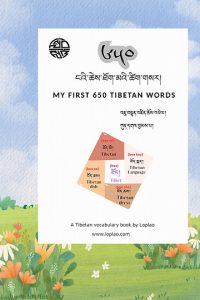
A vocabulary guide designed by Loplao to help learners acquire foundational Tibetan. Available on Loplao’s website:
https://www.loplao.com/product-page/tibetan-language-textbook
“Buddhist Hermits in Eastern Tibet: Saint-Making and Ascetic Performance” By Magdalena Maria Turek
Published on June 20, 2025 by Routledge, “Buddhist Hermits in Eastern Tibet” by Magdalena Maria Turek explores the ritual and social empowerment of Buddhist monastics devoted to meditation under a charismatic master.
From the publisher’s website:
Based on ethnographic research at a remote hermitage in Yushu Tibetan Autonomous Prefecture, Qinghai province in China, this book examines contemplative practices and ascetic regimes as performances of renunciation, self-formation, and devotion, arguing that the master performs the ideal of Buddhist asceticism via his body and in front of a participant audience. Paralleling Tibet’s famed hermit Milarepa (eleventh/twelfth century), the ascetic master Tsultrim Tarchin is believed to have achieved liberation “in this body and life,” demonstrating that renunciation can be empowering and that elite practices and local tradition can be relatable to untrained laity and transnational practitioners alike. Providing new insights and capturing a vital aspect of the ethno-religious revival among Tibetans in China, this book enhances our understanding of Buddhist meditation in retreat and of the social and embodied dimensions of spiritual liberation.
Bookshop: https://uk.bookshop.org/a/4863/9781032802954
Amazon: https://amzn.to/4g68scZ
“The Magical Adventures of the Sixth Dalai Lama: His Life and Loves” By Robert A.F. Thurman and Annie Bien
Published by Tibet House US in September 2025, “The Magical Adventures of the Sixth Dalai Lama: His Life and Loves” by the late Robert Thurman and Annie Bien is an historical novel on the life and world of the Sixth Dalai Lama, Tsangyang Gyatso (1683–1706).
From the Tibet House US website:
Based on period sources and official biographies, his life unfolds in the form of a third level Tibetan biography, a secret liberation story that reveals the meditative state and actions of a siddha, an accomplished master or saint. His poetry sings the narrative thread of his life, revealing his magical activist deeds to shape the complex relationships entangling Tibet and to benefit the surrounding countries of Mongolia, China, and India, while offering a vision of future benefit to the whole planet, including the West. This story explores the possibility that the Sixth Dalai Lama renounced his monk’s vows to channel his holy messiah’s love of living beings into the life of a layperson, to descend from iconic isolation in his monastic Potala palace to be nearer to the lives of his people, protect his Tibetan nation and its lay and monastic communities, pacify the war-torn Central Asian geopolitics of Mongol and Manchu conquerors and their Chinese subjects, and promote the sophisticated spiritual sciences, freedom-loving culture, and mystical language of his beloved Tibet. The Sixth Dalai Lama’s love poems are filled with humor and longing, joy and dismay, with expressions that touch the profound and evoke the essence of being human.
Bookshop: https://uk.bookshop.org/a/4863/9781941312124
Amazon: https://amzn.to/4fUOoM5
Available from Tibet House US here: https://shop.thus.org/products/the-magical-adventures-of-the-sixth-dalai-lama-his-life-and-loves-hardcover
“The Red Wind Howls: A Novel” By Tsering Dondrup, Translated by Christopher Peacock
Published by Columbia University Press in June 2025, “The Red Wind Howls: A Novel” by Tsering Dondrup and translated into English by Christopher Peacock is a remarkable novel by one of Tibet’s foremost authors, a courageous and gripping portrayal of Tibetan suffering under Mao’s regime.
From the publisher’s website:
The story delves deep into forbidden history, spanning the famine of the Great Leap Forward, the Cultural Revolution, and, most taboo of all, the 1958 Amdo rebellion when Tibetans rose in armed revolt against the Chinese state. Tsering Döndrup self-published the book in 2006, because no publisher would risk accepting it. When the authorities caught wind, all copies were confiscated and the author faced severe reprisals. He lost his job as head of the local archives, his passport was confiscated, and he has been under close surveillance ever since.
This powerful novel is set in part in the punitive labor camps to which Tibetans were sent after the failed rebellion, where many perished from starvation or forced labor. Inside and outside the camps, it depicts with dark humor a world of informers, cruelty, and score settling, against the backdrop of immeasurable environmental devastation and the destruction of traditional Tibetan ways of life. The novel draws on extensive interviews conducted by the author, and the rhythms of oral storytelling are reflected in its fragmented narrative style, which jumps back and forth between periods and events. An unparalleled account of the Chinese Communist Party’s takeover of Tibet, The Red Wind Howls is both a richly imaginative work of fiction and a vital piece of historical testimony.
Bookshop: https://uk.bookshop.org/a/4863/9780231213738
Amazon: https://amzn.to/4gchzZP
“Rules of the House” By Tsering Wangmo Dhompa
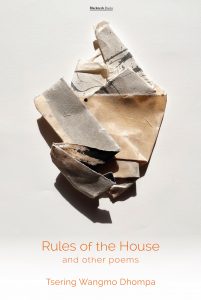
Published by Blackneck Books in Dharamsala, India, in November 2025, this collection introduces the inimitable Tsering Wangmo Dhompa’s poetry to the Indian subcontinent for the first time.
Drawing from her acclaimed works including Rules of the House, In the Absent Everyday, and My Rice Tastes Like the Lake, these poems unveil themselves like rare treasures discovered in hidden depths. Dhompa’s language flows with exceptional precision, creating moments of striking clarity and astonishing complexity. Rules of the House and Other Poems stands as an essential addition to contemporary poetry collection.
Contact Blackneck Books for this title via their social media channels: https://www.instagram.com/blackneckbooks/
“Ocean, as Much as Rain – Stories, Lyrical Prose, and Poems from Tibet” By Tsering Woeser, edited and translated by Fiona Sze-Lorrain with Dechen Pemba
Published in February by Duke University Press, “Ocean, as Much as Rain – Stories, Lyrical Prose, and Poems from Tibet” by Tsering Woeser, edited and translated by Fiona Sze-Lorrain with Dechen Pemba, presents for the first time in the English-language world a collection of masterfully translated literary writings by prominent Tibetan writer Tsering Woeser.
From the publisher’s website:
In these stories, lyrical essays, and poetry, Woeser interweaves texts, photographs, silences, and documentary details. Featuring a distinctively imaginative use of satire and digressive rhetoric, Woeser’s stories bring to life Tibetan characters whose lives are entwined with politics, history, and religion. Woeser illuminates the ruins and places that she has come across during her various sojourns in Chinese-ruled Tibet, reviving sites from the past of her parents and their generation. These writings range from ingenious retellings of cultural encounters and confrontation to insightful commentaries on ecological issues and tourism in Tibet that never shun contradictions, dilemmas, or questions about the future. With an introduction by Fiona Sze-Lorrain and an author interview by editors-translators Sze-Lorrain and Dechen Pemba, “Ocean, as Much as Rain” is a landmark publication that celebrates the work of a steadfast dissident and a leading Tibetan literary figure of our times.
For more information see our dedicated page to “Ocean, as Much as Rain” here: https://highpeakspureearth.com/order-information-for-ocean-as-much-as-rain-by-tsering-woeser/
Bookshop: https://uk.bookshop.org/a/4863/9781478033110
Amazon UK: https://amzn.to/4abx8iF
“The Forest of Snow” By Swami Ramananda Bharti, Translated by Somdatta Mandal
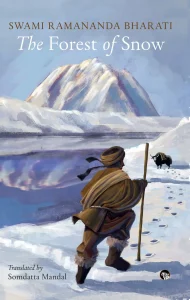
Published in June 2026 by Speaking Tiger Books, “The Forest of Snow” by Swami Ramananda Bharti and translated by Somdatta Mandal is a rare firsthand account of a journey to independent Tibet, tracing the sacred routes to Mount Kailash and Manas Sarovar in one of the earliest Bengali travelogues.
From the publisher’s website:
In 1898, the wandering saint Swami Ramananda Bharati set out from the Garhwal Himalayas towards one of the most remote and revered destinations in the world: Mount Kailash and Manas Sarovar in Tibet. Travelling through perilous mountain passes, glacial valleys and isolated border villages, Bharati journeyed not merely as a pilgrim in search of divine grace, but as an observant traveller deeply attentive to the people, landscapes and contradictions of the Himalayan world.
Bharati writes vividly of Bhutia traders preparing for their annual caravans into Tibet, highland communities who migrate with the changing seasons, weather-beaten caves sheltering pilgrims, mountain food that consists only of tea, butter and barley flour, and the tense borderlands shaped by colonial surveillance and Tibetan restrictions. Along the way he encounters an unforgettable cast of companions and strangers: clever interpreters, eccentric lamas,
drunken villagers, Tibetans suspicious of English spies, and even dacoits.
Blending spiritual reflection with sharp ethnographic observation, Bharati’s narrative moves beyond conventional pilgrimage writing to offer one of the earliest modern Bengali accounts of travel into Tibet. First serialised in 1901 as Himaranya, and later recovered from incomplete manuscripts, The Forest of Snow stands today as a rare and compelling record of Himalayan travel at the turn of the twentieth century.
“Mandala: Ritual of Visual Poetry” By Yakman K Tsering
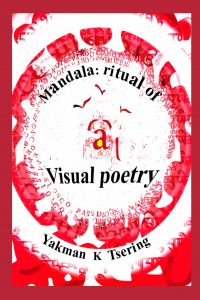
Published on April 4, 2026, “Mandala: Ritual of Visual Poetry by Yakman K Tsering is a vibrant and diverse collection of visual poetry blending Tibetan language and traditional Tibetan art forms like mandalas with digital design software.
From the Amazon description:
Through visual and experimental poetry, Yakman K. Tsering’s work offers a journey of self-discovery, mindfulness, and peace. His multilingual visual poetry has been published internationally in books and anthologies, and his contemporary collection creates a quiet space for reflection and renewal.
Blending text, mandala forms, and multilingual expression, the poems draw from eastern and western poetic thought. Each page becomes a visual meditation—where words are not only read, but seen. Language, layout, symmetry, and silence work together, inviting readers to slow down and engage with meaning beyond linear text.
These visual poems explore themes of healing, inner balance, identity, and awareness, offering gentle guidance rather than definitive answers. Mandala: Ritual of Visual Poetry does not ask to be understood in a single direction. Instead, it invites intuitive movement, patient looking, and openness—allowing meaning to emerge naturally.
Within these forms, readers may encounter reflections of their own emotions, fragments of memory, or moments from their unfolding lives. The collection includes textual images, typography, word-drawings, and digital concrete expressions—mystic in nature, transcending linguistic borders and conventional poetic forms.
Amazon: https://amzn.to/3SuKd0r
Younger Audiences
“Tibetan History Made Memorable” By Tenzin Lakshey
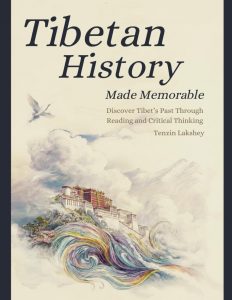
Published in June 2026, “Tibetan History Made Memorable” by Tenzin Lakshey takes readers on a visual journey through 36 chapters of Tibet’s most defining historical moments. Designed for the Tibetan youth and anyone seeking to explore Tibet’s vast history, this book turns history into an experience of reading, seeing, thinking, and remembering.
From the Amazon description:
From Tibet’s mythical origin stories to the first arrival of Buddhism, from the near extinction of Buddhism to its Second Dissemination, this book presents Tibetan history in a way that is clear, immersive, and easy to remember.
The journey continues through the lives and legacies of the Dalai Lamas, from the 1st to the 14th, tracing how spiritual leadership, cultural survival, political change, and exile became part of Tibet’s unfolding story. It also discusses the future 15th Dalai Lama and many modern topics connected to Tibet’s identity today.
Amazon: https://amzn.to/3SvSWiS
Published by Gemini Gift in September 2025, “The Path of the Dalai Lama” by Tom Taylor is a stunning graphic novel telling the inspiring story of the 14th Dalai Lama.
From the publisher’s website:
The 14th Dalai Lama, renowned as a moral leader and spiritual teacher worldwide, is famous as a peacemaker yet stands as an unwavering fighter for the freedom of the Tibetan people, and above all, for their spiritual and physical culture.
This original biography in graphic novel form, sensitively researched and written by Tom Taylor and stunningly illustrated by Matyaš Namai, with the approval of the Office of His Holiness, tells the inspiring story of Tenzin Gyatso, born to be the 14th Dalai Lama, and offers remarkable insights into the dramatic events of his life and times, together with profound meditations on the path to inner peace and harmony within the world.
Bookshop: https://uk.bookshop.org/a/4863/9781786751409
Amazon: https://amzn.to/45VSwp1
“Gratitude” and “Acts of Kindness” By His Holiness the Dalai Lama
Published in March 2026 by Dorling Kindersley, “Gratitude” and “Acts of Kindness” are two titles developed in collaboration with His Holiness the Dalai Lama for young children. These calming board books contain beautiful original illustrations along with simple text.
“Gratitude”
From the publisher’s website:
His Holiness the Dalai Lama teaches young readers to practise gratitude in this wonderfully illustrated board book for children.
Gratitude can change your perspective of the world, and is a state of mind that can be easily achieved. By noticing the positive aspects in life, young readers can strengthen relationships and improve your emotional and psychological wellbeing – making this a perfect topic to introduce to children from a young age. Featuring beautiful illustrations and comprehensible text, it has never been easier to start practising gratitude!
Bookshop: https://uk.bookshop.org/a/4863/9780241758274
Amazon: https://amzn.to/4fSYtsO
“Acts of Kindness”
From the publisher’s website:
An act of kindness can be big or small. It could be as simple as holding the door open for someone, or checking in on a friend you haven’t heard from in a while. Reducing stress and anxiety, improving self-esteem, and boosting confidence are all examples of the benefits of acts of kindness to your mental well-being. By reading Acts of Kindness with your little one, you will be teaching them the power of being kind, and the positive impact that they will bring to the world around them.
Other titles in the series include: Loving Kindness and Peaceful Mind.
Bookshop: https://uk.bookshop.org/a/4863/9780241769829
Amazon: https://amzn.eu/d/fCNvfO5
Special Mentions
Vol. 4 No. 2 (2026): Journal of Tibetan Literature
A double issue as their journal is paused for the foreseeable future. The cover of this issue includes a painting by Kunsang Gyatso.
Read here: https://journaloftibetanliterature.org/index.php/jtl/issue/view/8
“Humans, Dogs and Other Beings: Myths, Stories, and History in the Land of Genghis Khan” By Baasanjav Terbish
Please note this title is Open Access and was published in April 2025.
From the publisher’s website:
Step into the windswept steppes of Mongolia and explore a world where humans and animals have coexisted for centuries in a delicate, profound dance. This groundbreaking book examines the complex relationships between the Mongols and four animals—dogs, marmots, cats, and camels—shedding light on a nomadic culture that is deeply intertwined with its natural environment. Drawing from rich ethnographic accounts, historical records, and personal memoir, the author, of Mongol origin, offers a vivid narrative that intertwines cultural insights with intimate reflections.
Each chapter delves into the dual nature of these animals: as both beings of Mongol cosmology and as tangible, living creatures that shape and are shaped by human lives. From the fierce loyalty and sharp temper of dogs to the culinary and medicinal significance of marmots, the mortal symbolism of cats, and the nurturing bond embodied by camels, these animals reveal unique facets of Mongol life and values.
Through these stories, the book invites readers to consider universal questions about humanity’s relationship with animals, our evolving cultures, and the shared fears, loves, and beliefs that define us. Insightful and evocative, this work is a must-read for anyone intrigued by human-animal connections, nomadic traditions, and the anthropology of coexistence.
Amazon: https://amzn.to/3TIzZKl
“Decolonial Endurance: Lisu Worldmaking Against Chinese Settler Colonialism” by Ting Hui Lau
June 2026, Stanford University Press
What does it mean to live through a world coming undone? How do people carry on amid rupture, loss, and grief? Decolonial Endurance explores these questions through the turbulent lives of Indigenous Lisu subsistence farmers in China’s Eastern Himalayas, bordering Myanmar and Tibet. Like many of China’s Indigenous borderlands, this mountainous region has long borne the force of encroaching Chinese state power. Since the 1980s, the Chinese state has been compelling the Lisu to give up their subsistence lifeways, move into urban settlements, and send their children to government boarding schools. In exchange for the so-called gifts of development – healthcare, income, and education – they suffer environmental and social catastrophes such as mass landslides, strange new illnesses, and toxic food.
Drawing on over a decade of engagement with the Lisu, Ting Hui Lau takes readers into the world of ex-shamans, heart-pained mothers, restless spirits, and demon-mad migrants as they grapple with the fallout from state development, which Lau argues is the latest phase in a centuries-long project of settler colonialism along China’s Southwest frontier. At once a portrayal of loss and an ethnography of hope, Lau chronicles Lisu worldmaking amid this destruction, centering their quiet resistance through everyday acts of communal caretaking. In a time of escalating geopolitical and ecological crisis, this book calls for a new decolonial politics rooted in the transformative power of endurance.
Bookshop: https://uk.bookshop.org/a/4863/9781503647183
Amazon: https://amzn.to/3UuRu0K
Follow Us!