
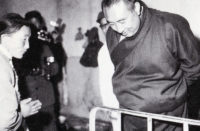
High Peaks Pure Earth presents English translations of a suite of four poems by renowned Amdo poet Yidam Tsering on the passing of the Tenth Panchen Rinpoche in 1989. Today, January 28, marks the 37th anniversary of the Tenth Panchen Rinpoche’s passing.
Thank you to the Amdo Translation Collective མདོ་སྨད་ལོ་ཙྭ་མཐུན་ཚོགས། for submitting these important and invaluable translations. The collective has also translated “Poems Lamenting the Sudden Loss of the Tenth Panchen Lama, Summer 1989” by Mangrawa Dukar Bum, prison poems by Mangrawa Dukar Bum and be sure also to read the incredible alphabetic poem bearing witness to the Cultural Revolution in Amdo by Akhu Tsultrim Sangpo.
About the Amdo Translation Collective
The Amdo Translation Collective (ATC) is an international group of Tibet scholars who work collaboratively on translating texts and media from early Post-Mao and contemporary Amdo into English, in order to make them accessible to larger publics. Their translation philosophy is to preserve as much as possible of the content, tone and form of the originals while crafting English language “siblings” that are accessible and poignant to readers who are not literate in Tibetan. In recent years, they have been focusing on translating texts related to the life and times of the tenth Panchen Lama, Lobsang Trinley Lhundrub Chokyi Gyaltsen (1938-1989).
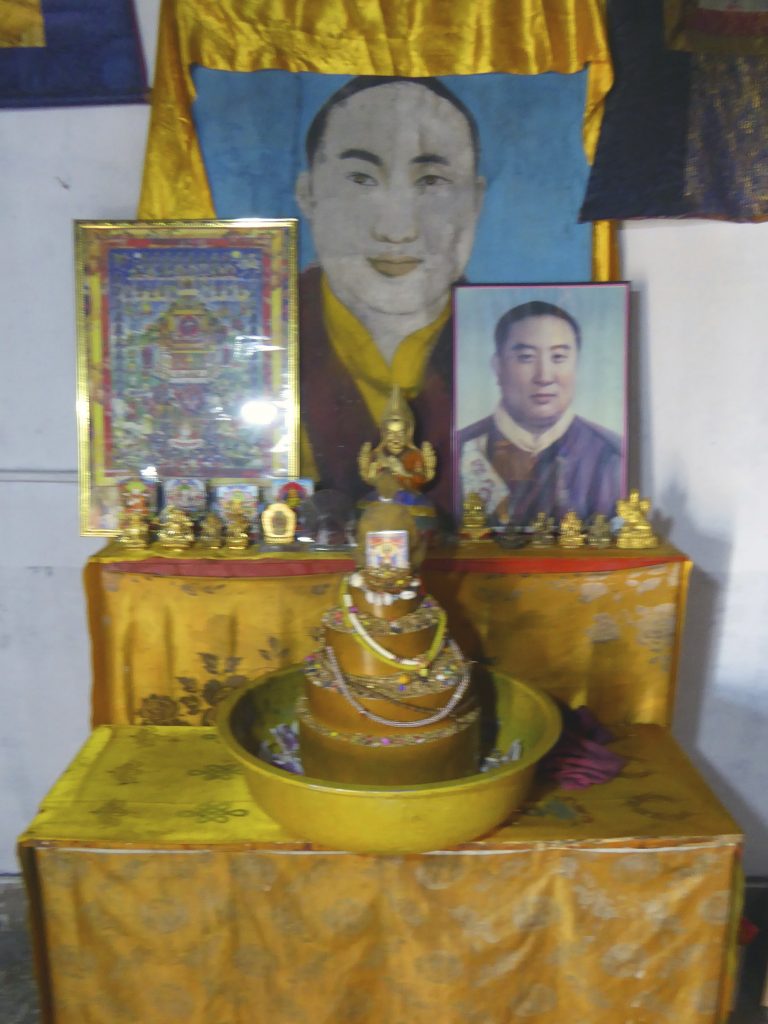
The Triumphant Return of the Panchen Lama
Offering Poems for the One Year Anniversary of the Panchen Rinpoche’s Passing, by Yidam Tsering (1933-2004), Winter 1989 [1]
Submitted by Amdo Translation Collective མདོ་སྨད་ལོ་ཙྭ་མཐུན་ཚོགས། on the thirty-seventh anniversary of the passing of the tenth Panchen Lama, January 28, 2026
[1] The Chinese language original poems were published in Yidam Tsering’s second anthology of poems, 雪域集, Snowland Collection, 1992, pp. 110-113. A Tibetan translation, perhaps by Yidam Tsering’s close friend and frequent translator, Khargang Traba (Tashi Tsering), was published in པན་ཆེན་སྐུ་འཕྲེང་བཅུ་བའི་རྟག་བཏན་གྱི་མཛད་འཕྲིན་རྗེས་སུ་དྲན་པ། Remembering the Glorious Deeds of the Tenth Panchen Lama (2007), a commemorative volume, edited and printed in Bis mdo, of the Panchen Lama’s 1987 visit to his home region of Bis mdo.
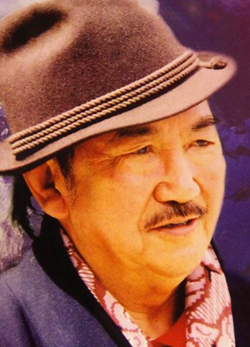
Yidam Tsering was widely known and revered across Tibet, China and the Tibetan diaspora, as what Lara Maconi calls “one of the most vigorous and unconditional of spokesmen on Tibet” (p. 166)[2]. Born in 1933 to a family of poor herders in Tsong kha, near Kumbum monastery in northeastern Amdo, Yidam Tsering did not receive formal schooling until his early teen years, and then only in Chinese language. Coming of age amidst the tumultuous years of the Guomindang and the Qinghai warload Ma Bufang, Chinese language schooling was the only education available to poor Tibetans, and then only to a few being groomed as translators and mediators for Muslim Hui or Han Chinese troops. As Yangdon Dhondup points out, Yidam Tsering was part of the first cohort of Chinese-language trained Tibetan writers who came from impoverished backgrounds and thus the socialist message of the Chinese Communist Party (CCP) had been appealing to them[3]. Yidam Tsering enthusiastically joined the CCP at age 16 in 1949 and his early writings embraced the promise of a new modern socialist nation in which Tibetans could enjoy equality and autonomy. He was famously multi-talented, joining the Northwest Nationalities College’s Song and Dance troupe in the 1950s, where he directed, produced and wrote performances and songs. He also chaired a literary institute and directed the Gansu Folk Art Institute.
However, Maoist atrocities in the late 1950s and during the Cultural Revolution, in which he was attacked as a local nationalist, led to Yidam Tsering’s deep disillusionment with Chinese-led socialist transformation. During the 1980s post-Mao reform years then, he turned to a personal journey of travel, reflection and meditation on reclaiming his Tibetan heritage. The majority of his poetic oeuvre was written then and began to reflect an exuberant Tibetan cultural nationalism. In this work, Yidam Tsering experimented with form and meaning in his Chinese language poems to both reflect his deepening pride in his Tibetan identity and to urge younger Tibetans to embrace the dignity and value of their own culture and history in order to forge a specifically Tibetan modernity. He also worked hard to encourage and mentor younger generations of Tibetan artists and writers, and even though he wrote largely in Chinese, he championed the development of Tibetan language literature and education, such that, as Maconi notes, he himself learned written Tibetan well enough to read it fluently and comment on translations of his work.
[2] “Lion of the Snowy Mountains: The Tibetan Poet Yi dam Tshe ring and his Chinese Poetry: Reconstructing Tibetan Cultural Identity in Chinese,” in Tibet, Self, and The Tibetan Diaspora: Voices of Difference, ed. P. Christiaan Klieger, Proceedings of the Ninth Seminar of the International Association for Tibetan Studies (Leiden: Brill, 2000).
[3] “The Roar of the Snow Lion: Tibetan Poetry in Chinese,” in Lauran R. Hartley, and Patricia Schiaffini-Vedani, eds., Modern Tibetan Literature and Social Change, New York, USA: Duke University Press, 2008.
Translators’ Introduction to the Poem
We first encountered Yidam Tsering’s suite of four poems dedicated to the memory of the tenth Panchen Lama in a Tibetan language version that had been included, with no indication of the translator, in a 2007 anthology produced in the Panchen Lama’s hometown of Bis mdo to commemorate the thirtieth anniversary of his visit to Bis mdo in 1987. That lead us to the Chinese original, where we realized that our English translation should start there. We treat Yidam Tsering’s four poems for the Panchen Lama as four episodes of a single narrative. It is hard to say when exactly they were written. Yidam Tsering ends each poem with the colophon, “written in winter 1989.” Yet the title of the whole is “Offering for the Anniversary of Panchen Rinpoche’s Passing.” The tenth Panchen Lama passed away January 28, 1989, thus Yidam Tsering could have composed these in December 1989, as the one year anniversary of that tragic event approached. They were first published in 1992 in his second anthology of poems, Snowland Collection (雪域集).
These four poems were included together in the section of the book called “Snowland Ballads,” in which, as Lara Maconi says, Yidam Tsering enthusiastically explored the landscape, history and culture of Tibetan regions, playing with the theme of agentive movement and travel. Here, she tells us, Yidam Tsering developed his trademark poetic pattern of “4-1-2” or seven-line poems divided into 4-line, 1-line, and 2-line stanzas, each of which has a specific role to play in the overall narrative and meaning of the poem. In the first quatrain, the poet uses rich and allusive metaphor to avoid censors and convey deep emotion and tension. In the second one-line stanza, the poem peaks as the poet evokes the main meaning of the poem. In the final couplet, the tension eases, and the poet admonishes the reader to consider broader implications. Maconi further explains that even as poets like Yidam Tsering who wrote in Chinese struggled with the cultural and linguistic tensions between their mother tongue and Chinese, Yidam Tsering stood apart for the ways in which he “Tibetanized” the Chinese language in his poems. This is strongly evident in these four poems, in which the poet selectively chooses Chinese characters and tweaks Chinese idioms to convey exclusively Tibetan cultural meaning. As Maconi put it, these are poems “in fluent Chinese but with no Chinese meaning” (p. 186). A monolingual Chinese reader would have a very hard time understanding the deeper meanings of Yidam Tsering’s paean to the Panchen Lama here.
In this light, we were drawn to these poems because, as a memorial for the Panchen Lama, whose passing had been so recent, they are absolutely remarkable in their tone of ecstatic triumph and hope, rather than despairing lament. As a well-known Amdo Tibetan intellectual and artist, Yidam Tsering’s coming of age under CCP auspices, and his post-Mao efforts to champion Tibetan cultural and linguistic pride, mirrored the tenth Panchen Lama’s own journey. The Panchen Lama, imprisoned for some fourteen years and brutally struggled during the Cultural Revolution for his 70,000 character petition to Chinese central leaders on Maoist atrocities in Tibetan regions, emerged from prison in 1978 and spent the next decade conducting tours of Tibetan regions and powerfully advocating for Tibetan political and cultural autonomy. His death at his monastic seat of Tashilhunpo in Shigatse at the young age of 51 was a devastating blow across the Tibetan world. He had been uniquely positioned to challenge Chinese state policies and advocate for Tibetan-led development.
However, Yidam Tsering’s four-part poem reads not like a lament, but as a manifesto, a Tibetan nationalist anthem for restoration and reemergence in an almost kingly, even martial Buddhist framework. Hearkening back to the tone of the young poet Dondrup Gyal’s call to a new generation of Tibetans in his 1983 “Waterfall of Youth,” Yidam Tsering positions the Panchen Lama in his persona as a powerful, even wrathful, yet compassionate tantric lama, who intentionally leaves for the benefit of sentient beings. On his way, he tamps down and conquers the demon armies of the plateau with his Dharmakaya body and particularly with his traveling feet. The four sections of the poem narrate the journey of the Panchen Lama back to the Dharmakaya and then to his reincarnation, depicting an explosion of the senses in a kind of synaesthetic cultural scenario of Tibetan sights, sounds, dance and music, where the Panchen Lama is empowered and expanded immeasurably in his passing from this life and and his return in glory to his next one. His enlightened mind then both creates the world anew and discerns right from wrong to help build a righteous, multi-national and democratic state in which Tibetans unite and Tibetan culture and language thrive.
The poem’s narrative assimilates the Panchen Lama to the Snowland landscape and equates his tremendous, transcendent power with the forces of nature, framing his passing as the beginning of a powerful storm high on the plateau (Thunderbolt) that produces massive flash floods and waterfalls surging down the mountains (Waterfall). It then opens out to a clearing sky with the morning sun and a rainbow of hope and new life with his reincarnation (Rainbow), and the reborn Panchen Lama becomes once again the source of all rivers, but also of insight, moral discernment and Tibetan national accomplishment high on the plateau (Source).
We thought that Yidam Tsering’s offering of this commemorative anthem is a powerful message of hope and national pride for the 37th anniversary of the tenth Panchen Lama’s passing, as well as an offering for the long life of the disappeared eleventh Panchen Lama.
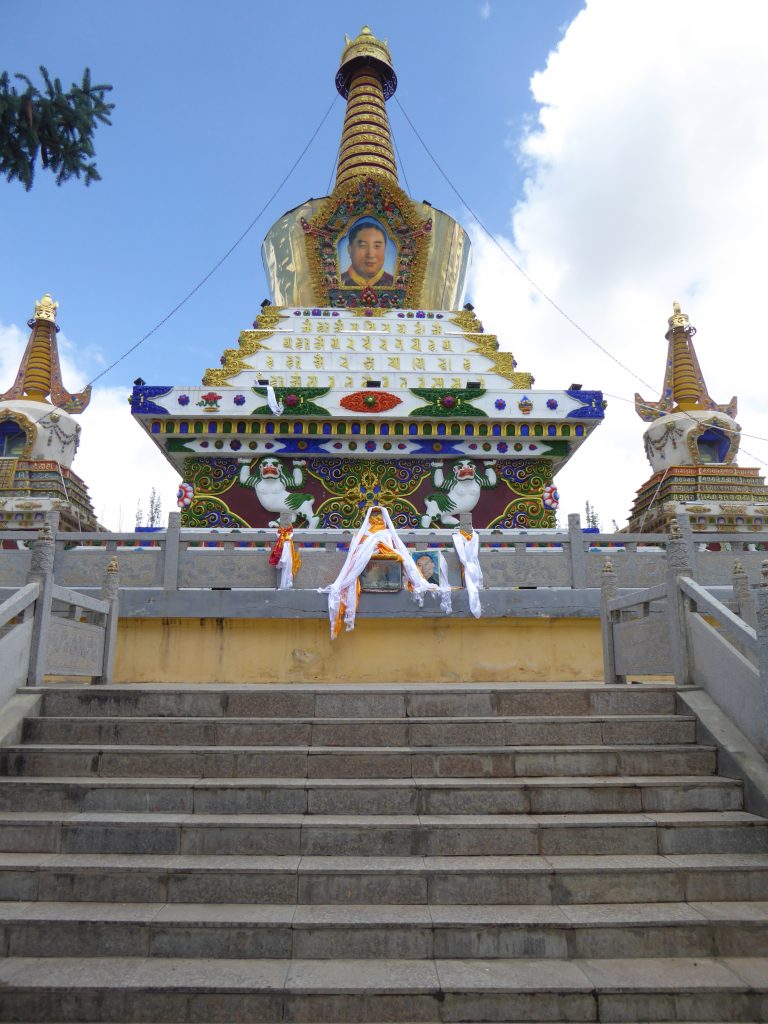
Four Poems by Yidam Tsering
迅雷
————–班禅大师圆寂周年祭 (一)
你去了。你去时那步履正气凛然,
脚下的风吹皱了铁马金戈的淫威,
难怪迎面的路已流泻昨夜梦见的神韵,
以至于撩拨起三代人同步精进的雾围!
动地的管弦共一曲气贯长虹的壮美!
待春风化雨般鼓舞了久久封冻的冰河,
我雪域八江里再急驰不及掩耳的迅雷!
1989.冬
Thunderbolt
An Offering for the Anniversary of the Panchen Rinpoche’s Passing (1)
You left. When you left your steps were majestically righteous,
The wind beneath your feet crushed the tyranny of the demon army,
No wonder the path ahead flowed with the dakini’s music of last night’s dream,
so that it incited three generations to walk ahead together through the fog!
The magnificence of earth-shattering orchestral music swells with one tune like a rainbow across the sky!
Like the spring wind and rain, it drummed on the long-frozen glaciers and,
the eight rivers of our Snowland once again surged down with an ear-splitting thunderbolt!
Written in winter 1989
飞瀑
————–班禅大师圆寂周年祭 (二)
你去了。你去时步履象海啸山呼,
任一路数落有如银河决口的飞瀑,
难怪苍茫雪域又闪烁风云不惑的灵光,
以至于凝重了四百万交口呼应的音符!
数往的声浪共一腔交响知来的乐谱!
待净滤的泉露酿就了河清海晏的美酒,
再听我阿里琴弹拨那雍布拉冈的谈吐!
1989.冬
Waterfall
An Offering for the Anniversary of the Panchen Rinpoche’s Passing (2)
You left. When you left your steps roared from the mountains like a tsunami,
From every way cascaded a waterfall as if the milkyway had broken loose,
No wonder the vast Snowland again shone with a divine light unafraid of the storm,
So that it deepened the musical notes of four million united voices!
The harmony of past melodies will compose the joyous symphony of the future!
Like clear spring water, it fermented into the fine liquor of peace,
Listen again to the voice of Yumbulagang[4] plucked on my Ngari lute[5]!
Written in winter 1989
[4] Yumbalagang, located in Lhokha on the Yarlung Tsangpo river 192km southeast of Lhasa, is considered to be the first palace of the Tibetan kings. It was destroyed during the Cultural Revolution and only partially rebuilt.
[5] A dranyan (སྒྲ་སྙན) or Tibetan lute is a fretless three-stringed musical instrument. Ngari is in far western Tibet.
彩虹
————–班禅大师圆寂周年祭 (三)
你去了。你去时那步履雷厉风行,
头上的汗腾湿了火烧云霞的焦躁,
难怪今朝的天空涌动万道彩虹的风彩,
以至于萌发了又一茬耕播史诗的新潮!
振翅的百鸟共一派春意烂漫的舞蹈!
待光风霁月般宽敞了人人坦白的胸襟,
再看我雪域人倾注给五颜十色的奥妙!
1989.冬
Rainbow
An Offering for the Anniversary of the Panchen Rinpoche’s Passing (3)
You left. When you left your steps struck like thunder and moved like the wind,
The sweat from your brow dampened the disquiet of the fiery clouds of sunset,
No wonder this morning’s sky surged with countless colors of a rainbow,
So that once again a new era of poetry, history and debate sprouted forth!
Hundreds of birds, wings outstretched, together perform a vibrant dance of spring!
Like a light breeze and clear sky, it opened everyone’s honest minds,
Look again at the devotion of our Snowland people to the marvel of many colors.[6]
[6] Ostensibly referring to the auspicious rainbow, this metaphor is hard to translate in English elegantly because it is so loaded with layers of potential connotations. The Chinese idiom for “multicolored” is usually 五顏六色, literally “5 colors and 6 hues”. Characteristically, Yidam Tsering tweaks the idiom, perhaps to Tibetanize it, to 五顏十色, literally “5 colors and 10 hues”. In the Tibetan context, “multicolored” could refer to the Buddhist idioms of five-colored prayer flags, the five colors representing the five elements, or the color-coded multi-faced tantric deities. In a secular vein, it could also connote the multicolored Tibetan national flag, or the vision of a multinational democratic state. Multi-colored here would stand in opposition to the mono-chrome world of the Mao-suited revolution, or to Han Chinese domination and assimilation policies.
源流
————–班禅大师圆寂周年祭(四)
你去了。你去时象一轮红日升起,
任阳光再梳理松柏和杨柳的新意,
难怪满路的花卉间蜂蝶儿交相翻飞,
以至于彩绘了解释宇宙人生的哲理!
通达的情理共一脉心血而奔流不息!
待菩提萨婆们辨明了善于恶不同的源流,
自觉本性的大家将仔细平等待人的真谛!
Source
An Offering for the Anniversary of the Panchen Rinpoche’s Passing (4)
You left. When you left it was as if a morning sun rose,
Letting sunshine again sort out the new ideas of pines and willows,
No wonder the bees and butterflies playfully fluttered among the flowers,
So that they painted the logic that explains the universe and human life!
Like heart blood, the clear insight of reason surges constantly through one vein!
Allowing the Bodhisattvas to discern the different sources of good and evil.
And everyone awakened to their true nature will attend to the truth of equality.[7]
[7] An allusion to the bodhicitta of བདག་གཞན་མཉམ་པ།, literally “equalizing self and others”. Equalizing self and others means recognizing the equality of yourself and others in wishing to find happiness and wishing to avoid suffering.
Follow Us!